A Better DSP Program Starts With Fairness — And Starts With Us

There is a quiet truth that every Delivery Service Partner already knows in their gut: the program only works when the people running it can actually succeed. Not just survive a quarter. Not just scrape past the next scorecard. Truly build something stable, profitable, and worth passing on. That is what fair treatment really means — and right now, it matters more than it ever has.
This is not a complaint piece. DSPs are not asking for charity or a free ride. They are asking for something far more fundamental: a partnership that holds up its end of the bargain. Because when owners are set up to win, the whole network gets stronger. A more sustainable program for everyone who depends on it, Amazon included.
So let’s talk plainly about why this moment is different, and why the case for fairness has never been more urgent.
A Partnership Only Works When Both Sides Can Thrive
Amazon built the DSP program on a powerful promise: entrepreneurs could own a real business, grow it, and reap the rewards of their work. Thousands of people believed in that promise. They signed leases, hired drivers, learned employment law on the fly, and poured their savings into making it work. They showed up before dawn and stayed long after the last package landed.
That kind of commitment deserves a partner who treats it as something to protect, not something to squeeze. A healthy partnership is not measured by how much one side can extract from the other. It is measured by whether both sides come out ahead. When owners are thriving, they invest more, retain better drivers, and deliver stronger results. When owners are struggling, the cracks show up everywhere — in turnover, in safety, in service. Fair treatment isn’t a feel-good idea. It’s the foundation the entire program stands on.
The Numbers Tell a Story We Can’t Ignore
The pressure DSPs feel today is not imagined, and it is not isolated to a few unlucky operators. It’s widespread, it’s measurable, and it’s getting worse.
Survey data from DEFT shows that more than 95% of owners report net margins much lower than when they first joined the program. Nearly all of them point to the same culprits: auto and workers’ compensation insurance costs that keep climbing, fleet repair bills that drain whatever capital is left, and workloads that have grown heavier year over year. Around 90% say they are working harder than they did a year ago, often for less.
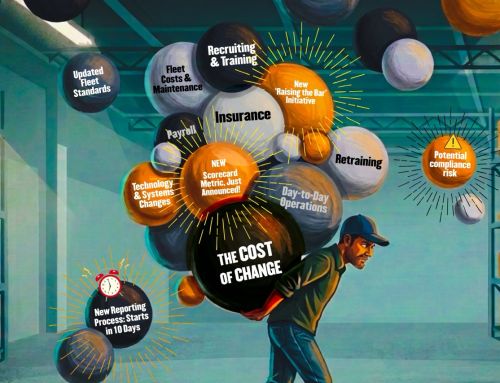
Then there’s the human cost. More than 80% of owners describe their daily stress as “high” or “extreme.” Many report trouble sleeping, persistent fatigue, and anxiety that follows them home. These are not numbers on a spreadsheet. These are real people carrying the weight of payroll, vehicles, performance metrics, and uncertainty all at once.
When the busiest, highest-revenue stretch of the year — Peak — still ends with more than half of owners reporting lower profits or thinner margins, something structural is broken. You cannot work your way out of a system that takes more the harder you push.
The Real Problem Is Imbalance
Look closely and a pattern emerges. The scorecard thresholds keep creeping. The rate cards barely move while costs surge. New responsibilities arrive without new pay. Owners absorb the risk of rising insurance, aging fleets, and shifting requirements, while having almost no say in the decisions that shape their businesses.
That last point cuts deep. Most owners feel they have no real voice in changes that land on them overnight. Updates appear, terms shift, and the people most affected are the last to know. It’s hard to feel like a business partner when you’re treated like a contractor who simply receives instructions.
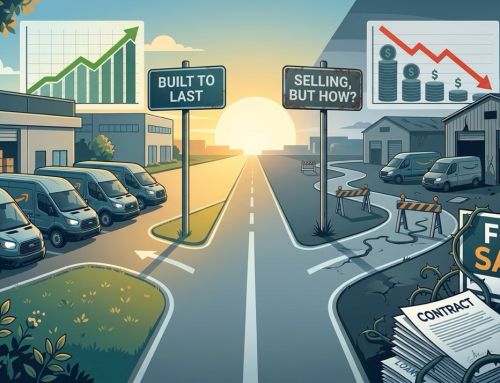
And then there’s the exit. Many owners discover too late that the business they spent years building is far harder to sell than they ever expected — because the transfer depends on approvals they don’t control. When you can’t fully own your upside and you can’t cleanly walk away, the equation stops looking like ownership and starts looking like a trap.
None of these problems are flukes. They are symptoms of a single, deeper issue: an imbalance of power and risk that has tilted too far in one direction. Fairness is simply the act of bringing that balance back.
Why This Moment Demands Action
Here’s the encouraging part. Problems built into a system can be fixed by changing the system. And the conditions for change have never been better.
The data is now undeniable and documented. Owners across the country are recognizing they share the same struggles, which means the old strategy of facing every challenge in isolation is finally giving way to something stronger — a collective voice. Regulators, media, and the public are paying closer attention to how large companies treat the small businesses in their networks. The moment is ripe.
Waiting is the real risk. Every quarter that the imbalance goes unaddressed, more good operators burn out, more equity erodes, and more talent walks away from a program that should be a model for entrepreneurship. The owners who built this network are exactly the people who can fix it — but only if they act together, and only if they act now.
What DEFT Stands For
DEFT — DSPs for Equitable and Fair Treatment — exists for one straightforward reason: to make the DSP program better for everyone who depends on it. That includes owners, drivers, customers, and yes, Amazon too. A fairer program is a more stable, more sustainable, and more successful program. This was never about tearing anything down. It’s about building something that lasts.
DEFT gives owners what they’ve lacked for too long: a shared voice, real legal insight, hard data, and a community that understands exactly what you’re carrying because they’re carrying it too. Instead of advocating alone, you advocate alongside thousands of operators who want the same thing — predictable economics, a meaningful say in the decisions that affect their businesses, and a genuine path to building lasting value.
That’s not a fantasy. It’s how every healthy business relationship in this country already works. DSPs are simply asking for the same fair footing.
Your Voice Is Part of the Solution
Fair treatment isn’t handed out. It’s won by people who decide, together, that the status quo isn’t good enough — and who are willing to stand up and say so.
You built your business with grit, long hours, and real risk. You’ve earned a program that respects that investment and rewards it. The path to getting there starts with showing up, speaking up, and standing alongside others who share the goal.
Join the movement at deft-us.com. Add your voice, lend your experience, and help shape a DSP program that works for everyone. The future of this program won’t be decided by silence. It’ll be decided by owners like you who choose to be part of the change.