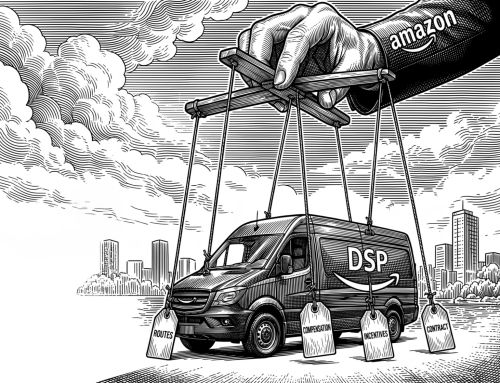
Amazon DSP Fantastic+ Ratings Plunge After Scorecard Update

For Amazon Delivery Service Partners, the Scorecard has always been more than a report card. It is a measure of operational performance, a signal of standing within the program, and, for many owners, a key factor in whether the business model feels financially sustainable.
As a result, the Amazon DSP Fantastic+ Ratings have become a focal point for many partners navigating these changes.
That is why Amazon’s latest Scorecard changes have become one of the clearest pain points in a recent DSP survey.
Although the latest DEFT Prime Week survey results should be read as feedback from respondents rather than a census of all DSPs, the pattern remains striking: among those who responded, the Scorecard changes were associated with a sharp drop in reported Fantastic+ performance and widespread concern about the financial impact.
This context is crucial for understanding the implications of the recent Scorecard modifications on Amazon DSP Fantastic+ Ratings.
Before the latest Scorecard update, 74.2% of respondents said they achieved Fantastic+ between 80% and 100% of the time. Since the update, that figure has fallen to just 22.7%.
The drop is also visible when looking at the midpoint of each response range. Before the update, the average reported Fantastic+ frequency was 81.8%. After the update, it fell to 41.6%. In practical terms, respondents reported that their ability to reach Amazon’s highest performance tier was cut roughly in half.
The financial impact was even more direct. 90.6% of respondents said the new thresholds have had a negative financial impact on their business.
That is the number that should get attention.
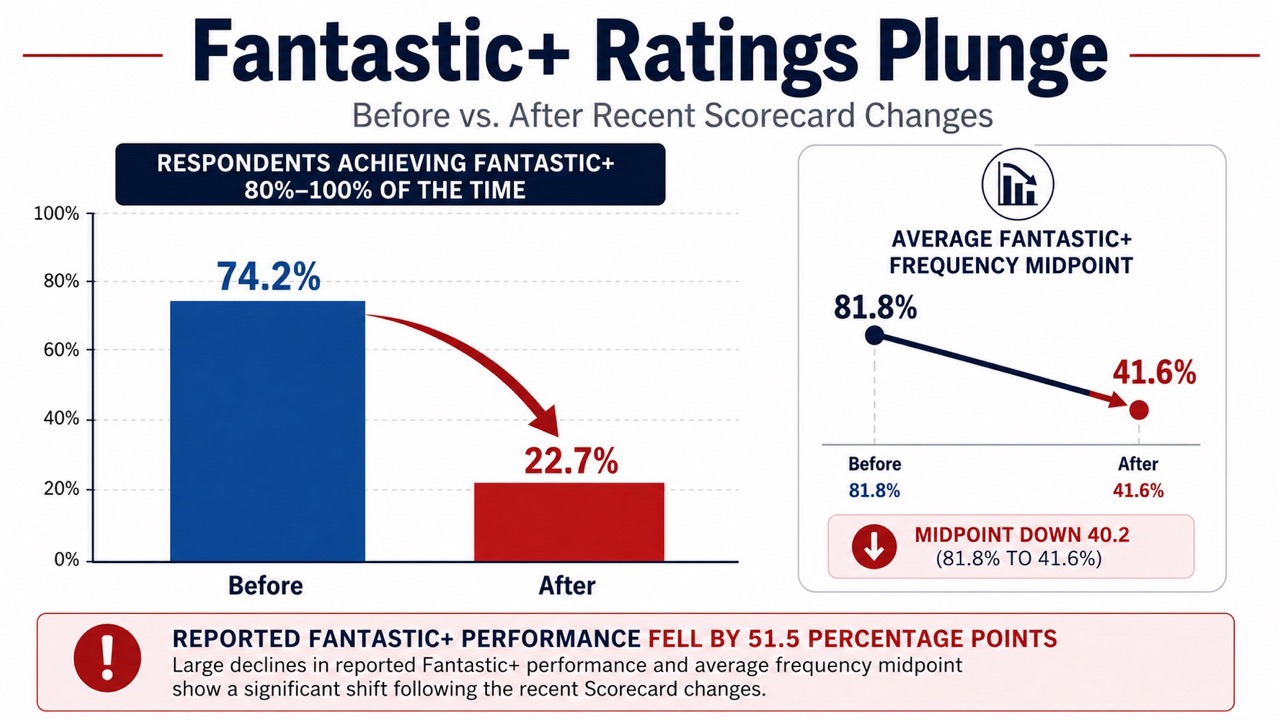
DEFT survey respondents reported that their average Fantastic+ frequency fell from 81.8% before the Scorecard update to 41.6% afterward.
A performance system can be demanding and still be viewed as fair. Operators expect to be measured. They expect standards. They understand that safety, reliability, customer experience, and execution matter. But when many operators who previously reported reaching the top tier frequently now say they are no longer able to do so, the question becomes whether the Scorecard is still measuring performance improvement — or whether it has changed the economics of the program.
The survey results suggest many respondents believe the goalposts moved.
This does not necessarily mean operational performance across the network collapsed. It may mean the new thresholds, weighting, or measurement structure made Fantastic+ substantially harder to achieve, even for operators who previously considered themselves high-performing.
That distinction matters. If a DSP’s operations, management discipline, and delivery execution remain largely the same, but its Scorecard outcome changes sharply, the operator is likely to experience the change as a standards reset rather than a performance correction.
And standard resets have consequences.
For DSP owners, the concern is not simply pride in a high rating. A lower Scorecard result can affect morale, planning, compensation expectations, and confidence in the program’s predictability. DSPs operate in a high-pressure environment with tight margins, complex fleet obligations, labor challenges, safety requirements, and shifting route demands. In that environment, predictability is not a luxury. It is part of how owners manage risk.
Among survey respondents, the Scorecard has become another source of financial pressure.
The clearest takeaway is this: the latest Scorecard update appears to have created a major gap between how respondents say they performed under the previous system and how they are now being evaluated. Whether Amazon views the new thresholds as a necessary quality improvement or a recalibration of standards, many respondents are experiencing the change as a direct hit to their businesses.
A fair performance system should do three things. It should be transparent. It should be achievable for operators who execute well. And it should create incentives that improve the network without destabilizing the businesses responsible for running it.
The survey results raise serious questions about whether the current Scorecard is meeting that test.
When nearly three-quarters of respondents said they once achieved Fantastic+ most of the time, and fewer than one-quarter say the same after the update, that is not a minor adjustment. It is a fundamental change in the operating environment for the DSPs who responded.
And when more than nine in ten respondents say the new thresholds have hurt them financially, the Scorecard issue becomes bigger than performance measurement. It becomes a business sustainability issue.
For DSPs, the message from respondents is clear: they are not asking to avoid accountability. They are asking for a Scorecard system that reflects operational reality, rewards strong execution, and does not quietly rewrite the economics of the program after owners have already committed their capital, fleets, teams, and livelihoods.