The Last-Mile Crisis No One Is Talking About: How Amazon’s DSP Program Is Failing Small Business Owners

How long can small business owners absorb rising costs, shrinking margins, and mounting stress before the entire last-mile delivery model collapses under its own weight?
That’s not a hypothetical question. It’s the reality facing hundreds of Delivery Service Partners (DSPs) across the United States right now—and the data to prove it has never been clearer.
In December 2025, DSPs for Equitable and Fair Treatment (DEFT) conducted a landmark survey of 266 active DSPs nationwide. The results paint a picture of an industry in crisis: one where workloads are climbing, profitability is eroding, and the human cost of doing business is becoming unsustainable. This article breaks down what the data reveals, what it means for the future of last-mile logistics, and—most importantly—what DSPs can do about it.
The Numbers Don’t Lie: A Program Under Acute Pressure
Let’s start with the most fundamental question any business owner should ask: Is this worth it?
For the majority of DSPs, the answer is no. Over 70% of DSPs report dissatisfaction with Amazon’s DSP program, with 35% categorizing their dissatisfaction as extreme. Just 21% express any degree of satisfaction. These aren’t disgruntled outliers. This is a systemic failure.
The Net Promoter Score (NPS)—the gold-standard metric for measuring customer and partner loyalty—tells the same story. When asked how likely they were to recommend the DSP Program to a friend or colleague on a scale of 0–10, the average rating came in at a staggering 3.1 out of 10.
When nearly three-quarters of your business partners would not recommend the program, something is fundamentally broken. Not operationally. Structurally.
The Financial Squeeze: A Perfect Storm of Rising Costs
Running a DSP business was never going to be easy. But the cost pressures DSPs face today are categorically different from what they signed up for.
Fleet costs have surged to unsustainable levels. According to DEFT’s survey, 90% of DSPs report increases in fleet maintenance and body repair costs over the past year, with two-thirds describing those increases as much higher. This isn’t a temporary spike. This is a structural shift in the cost of doing business.
Insurance costs are compounding the damage. 90% of DSPs report higher auto and workers’ compensation insurance costs in the last year, with 68% saying those costs are much higher. Meanwhile, 80% of DSPs are grappling with rising health insurance costs. These are not rounding errors on a balance sheet—they are margin-destroying forces that compound month after month.
The result? Margins are collapsing. Nearly all DSPs—73%—report that their current net margins are much lower than when they began the program. Another 17% say margins are somewhat lower. That means 90% of active DSPs are operating with declining profitability. Only 7% report margins that are the same or better.
This is not a coincidence. And it’s not a market anomaly. This is what happens when corporate cost-cutting strategies are offloaded onto small business partners without accountability or compensation.
Key Operational Insights

Rising auto and workers’ compensation costs are putting significant pressure on DSP margins. Insurance expenses for both have changed considerably over the last year.
Scorecard Creep: The Hidden Tax on DSP Profitability
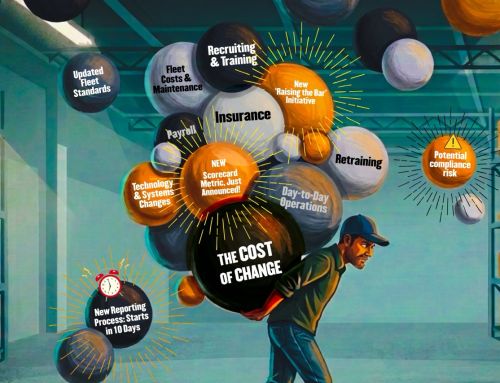
Of all the financial pressures DSPs face, one stands out as particularly insidious: scorecard creep.
When surveyed about the most urgent issues for financial sustainability, DSPs ranked Amazon’s scorecard threshold creep as the single most pressing concern—above insurance costs, fleet costs, and even co-employment practices.
So what is scorecard creep, and why does it matter?
Amazon evaluates DSPs against a range of performance metrics. Over time, these thresholds are quietly raised—sometimes without formal notice—forcing DSPs to operate at ever-higher standards without corresponding increases in compensation. More deliveries, tighter windows, higher expectations. Same pay. Or less.
The financial impact is real and significant. Meeting increasingly demanding scorecard requirements means hiring more staff, maintaining larger fleets, and investing in operational infrastructure. These costs are absorbed entirely by the DSP. The corporate partner collects the performance benefit. The small business owner absorbs the financial risk.
This is not a partnership. This is cost-shifting dressed up in partnership language.
Stress and Burnout of Amazon DSP

The survey shines a harsh light on the daily realities facing operators and drivers, revealing that the workload is intense and the expectations are relentless.
The Human Cost: Stress, Anxiety, and Burnout at Scale
Behind every balance sheet is a person. And the DEFT survey reveals a mental and physical health crisis that the industry cannot afford to ignore.
The data is sobering:
- 87% of DSPs report high or extreme stress as a regular part of their experience, with 45% rating their stress as extreme.
- 72% frequently experience anxiety or worry, with 33% reporting it always present.
- 74% experience high stress or tension often or always.
- 57% report persistent fatigue or exhaustion on a frequent basis.
- 57% struggle with difficulty sleeping or insomnia regularly.
- More than 40% report frequent feelings of low mood or depression.
When asked how much the demands of being a DSP contribute to their stress, 89% said significantly or entirely. These aren’t coincidental health issues. They are directly and demonstrably caused by the conditions of the program itself.
The emotional toll goes deeper still. The DEFT survey reveals that DSPs feel fundamentally disrespected by the very partner they are supposed to be in business with. The data shows:
- 82% disagree that Amazon allows DSPs to independently run their businesses.
- 88% disagree that Amazon compensates DSPs fairly for the work and risk they take on.
- 88% disagree that Amazon treats DSPs like a valued partner.
- 85% disagree that Amazon cares about DSP sustainability and financial success.
Perhaps the most telling finding of all: 76% of DSPs believe that reducing DSP margins is part of Amazon’s deliberate cost-cutting strategy.
That belief—held by three-quarters of active DSPs—reflects something deeper than financial frustration. It reflects a profound breakdown of trust. And when trust breaks down at that scale, no amount of program refinement will restore it without meaningful structural reform.
The Path Forward: Unity, Advocacy, and Reform
The challenges DSPs face are not insurmountable. But they cannot be solved in isolation. A single DSP raising concerns about scorecard thresholds or fleet costs has limited leverage. A unified network of DSPs, organized with clear goals and collective bargaining power, is a different matter entirely.
Real change in this industry will require three things:
- Unified Representation
DSPs need a seat at the table—not as individual operators, but as a unified voice with the organizational infrastructure to advocate effectively. Unified representation changes the power dynamic. It transforms individual complaints into a coordinated reform agenda that corporate partners cannot ignore. - Structural Accountability
Scorecard thresholds should not be raised without transparent communication and corresponding compensation adjustments. Fleet and insurance cost increases should be factored into program economics, not silently transferred onto DSP balance sheets. Fair compensation for all required tasks—including currently unpaid work—must be a non-negotiable standard. - Legislative Support
Long-term protection for DSPs requires more than corporate goodwill—it requires legislative frameworks that recognize the rights of small business partners in logistics programs. Advocacy at the policy level is essential to creating the equitable operating environment that DSPs deserve.
This Is Your Business. Protect It.
The DEFT survey data is not just a collection of statistics. It is a portrait of thousands of small business owners who took a risk, built a business, and are now watching that investment erode while the corporate partner who benefits most from their labor remains insulated from the consequences.
You built your DSP business with real money, real effort, and real sacrifice. You hired employees who depend on you. You made commitments—financial and personal—that deserve to be honored by a partner that takes your sustainability seriously.
The status quo is not working. The numbers make that undeniable. But knowledge without action changes nothing.
DEFT exists because DSPs deserve better—better contracts, better compensation, better treatment, and a genuine partnership that reflects the risk and effort they bring to the table every single day. DEFT is the organized, collective voice that gives DSPs the power to push back, negotiate, and drive the structural reforms this industry urgently needs.
The time to act is now. Join DEFT at deft-us.com and add your voice to the movement for equitable and fair treatment of DSPs across the country.
The data has spoken. The question is whether you will.